Micro Visions

NWA Mislabeled LL3

We purchased a 22.8 gram slice of an NWA meteorite in 2007 at the Sainte-Marie-aux-Mines mineral and gem show. For some unknown reason it entered our collection with an incorrect NWA number, a mystery yet to be solved. Looking at the thin sections that we had made, it very well could be an LL3 as our notes show. LL chondrites […]

NWA Mislabeled LL3 Read Post »

NWA 15915 achondrite-ung

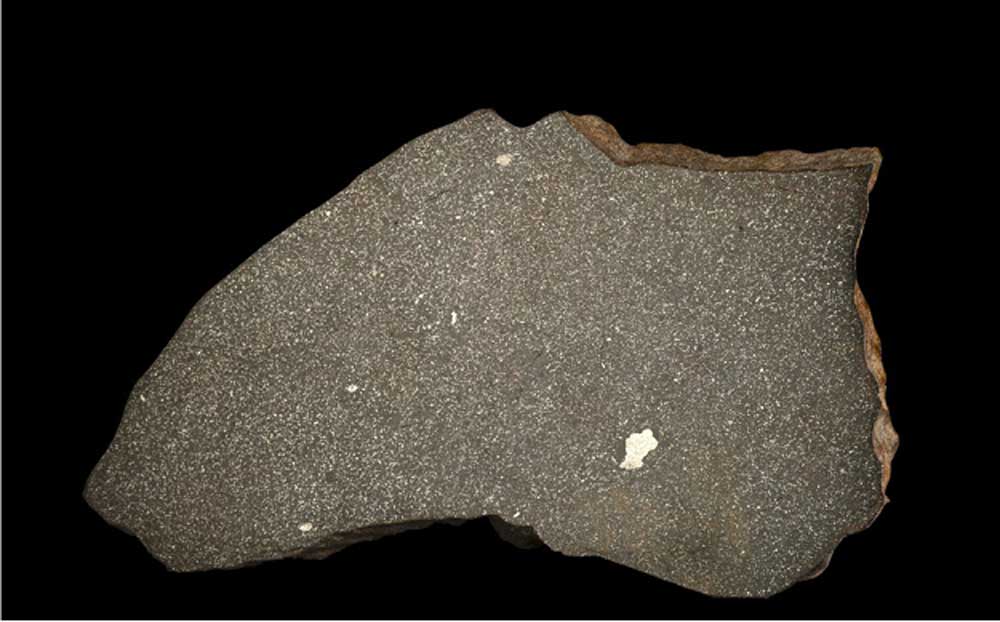
Northwest Africa 15915, achondrite-ung, is the remains of a long gone inner solar system body. That planet was large enough to differentiate then cool slowly. The 2.84 kg meteorite is nearly all pyroxene – mostly iron-free augite and 5% to 20% iron-free enstatite, depending upon the sample. Small opaque spherical grains lie within and between the millimeter size pyroxene grains.

NWA 15915 achondrite-ung Read Post »

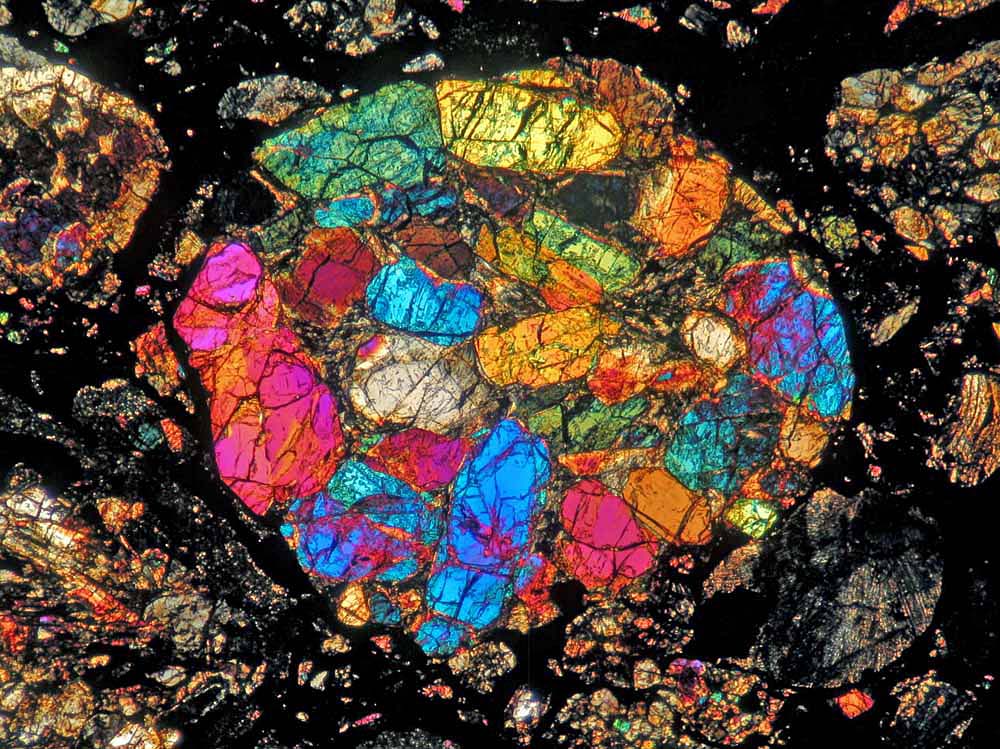
New Raymer LL4 in Color

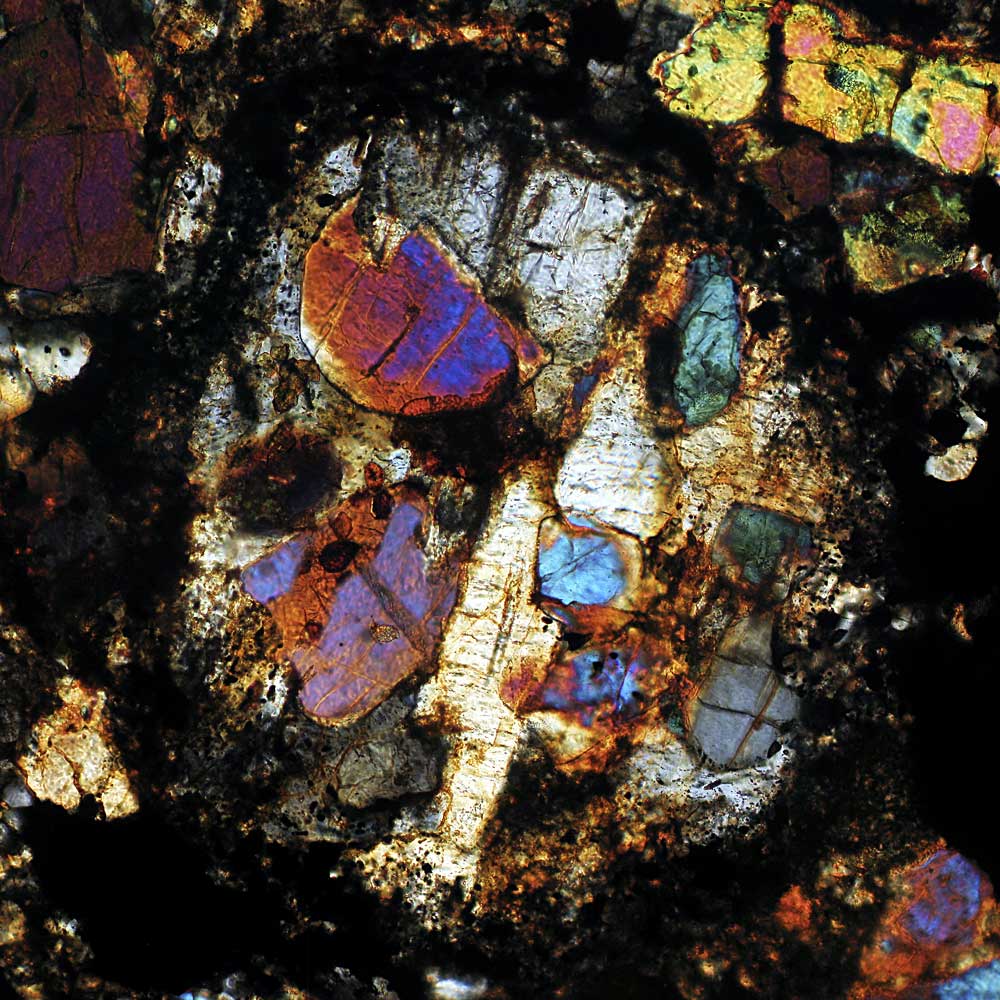
This thin section of New Raymer LL4 is one of over 100 that were deaccessioned by Arizona State University in 2014. We looked at some of the opaques in this sample back in September of 2021. Here we look at the section in “cross-polarized light” XPL. We’ll let the photos speak for themselves with only a few comments.    

New Raymer LL4 in Color Read Post »

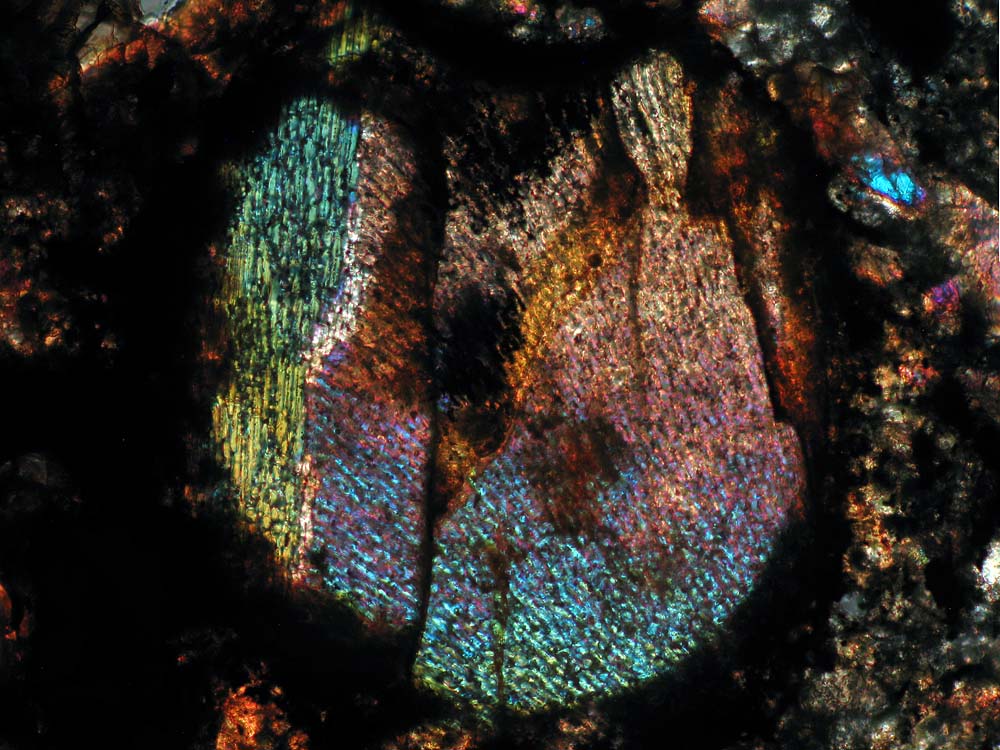
 SaU 001 L5

Sayh al Uhaymir 001 was a huge find, well over 400 kg. Steve Brittenham’s recent post on Paul Swartz’s Meteorite Picture of the Day induced me to check out a couple thin sections I had made some years back. The meteorite is “only” an L5 and has suffered shock, thermal metamorphism and terrestrial weathering, but it still retains interesting features.

 SaU 001 L5 Read Post »

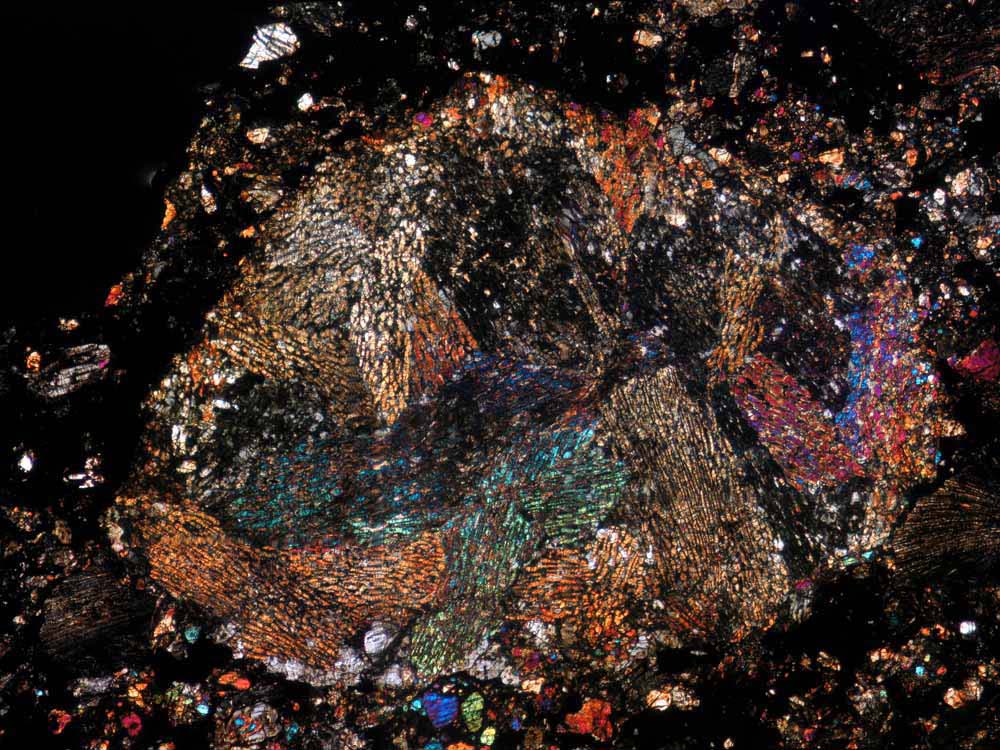
Lunar Olivine Gabbros

We have a few thin sections of lunar olivine gabbros in our collection. They are all of the NWA 773 clan. Randy Korotev says: The NWA 773 clan is one of the most unusual of lunar meteorites. It is unlike any rock in the Apollo collection. It contains at least 5 different igneous lithologies. The total mass of these stones

Lunar Olivine Gabbros Read Post »

Bristol Impact Layer

Meteor impact ejecta found in England has been shown to have come from the Manicouagan crater in central Quebec. The crater formation and the debris deposition have been both dated to 214 Ma, late Triassic. The age range of biotites in the sediment aligns with the age of those in the Canadian target rock. At the time of the event

Bristol Impact Layer Read Post »

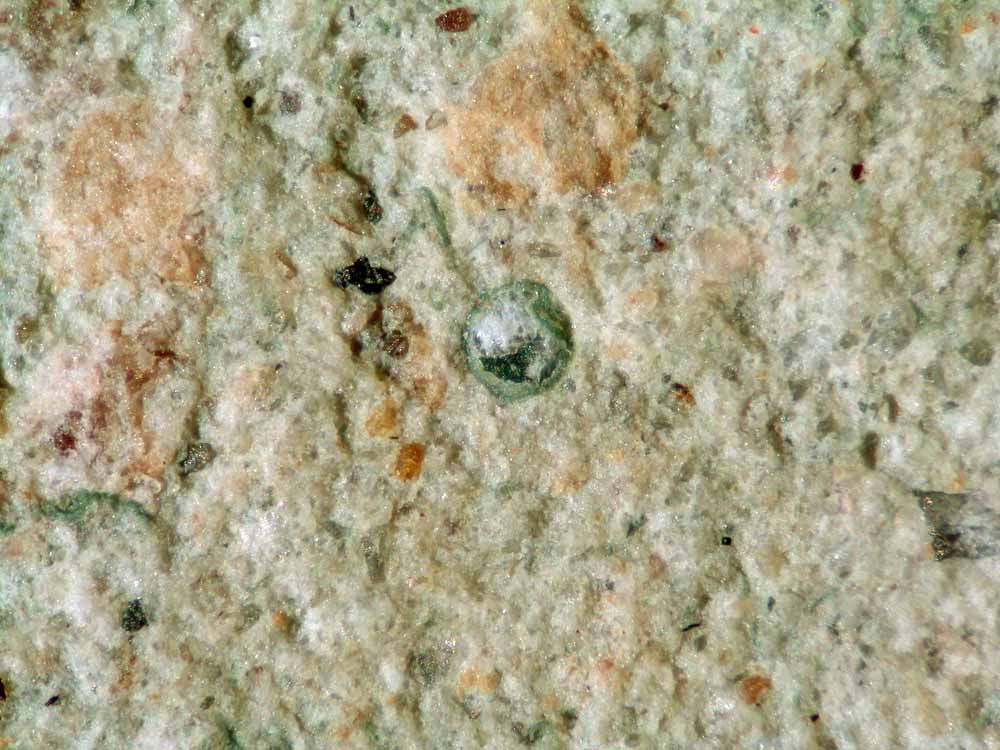
Spherules in NWA 4884

NWA 4884 is a lunar mingled basalt-rich breccia. It has both mare and highland components. It is launch paired with Antarctic meteorites QUE 94281 and Yamato 793274. They were all blasted off the moon at the same time. NWA 4884 contains spherules. The composition of the droplets in the Antarctic stones show that some are highland material and therefore the

Spherules in NWA 4884 Read Post »

SaU 562 Eucrite

I first saw this material at “Ensisheim Météorite 2008.” Luc Labenne had come down from Paris for just the day and was blowing through the show really fast. He had a few thin sections, I had a homemade viewer to check them out and I bought a couple. It’s spectacular because of the relatively large mineral grains and it is

SaU 562 Eucrite Read Post »

Whiskers in NWA 16100

NWA 16100 was 1,922 grams, in three pieces, of olivine bearing diogenite-melt rock. It contains vesicles which are apparent in this cut fragment and whiskers that are easily seen in thin section under magnification. This cut fragment was sourced from Jason Whitcomb of https://www.handfulofspace.com/                                

Whiskers in NWA 16100 Read Post »

Cedar (Texas) H4

This thin section was one of a hoard that was deaccessioned by Arizona State University in 2014. My notes from then say “Very large sample. Interesting and busy TS. (Is TS curved/cupped?)” This week I looked closer and found that the glass cover slip is partially detached from the base glass slide, lifting up – and has brought the stone

Cedar (Texas) H4 Read Post »

Portales Valley H6

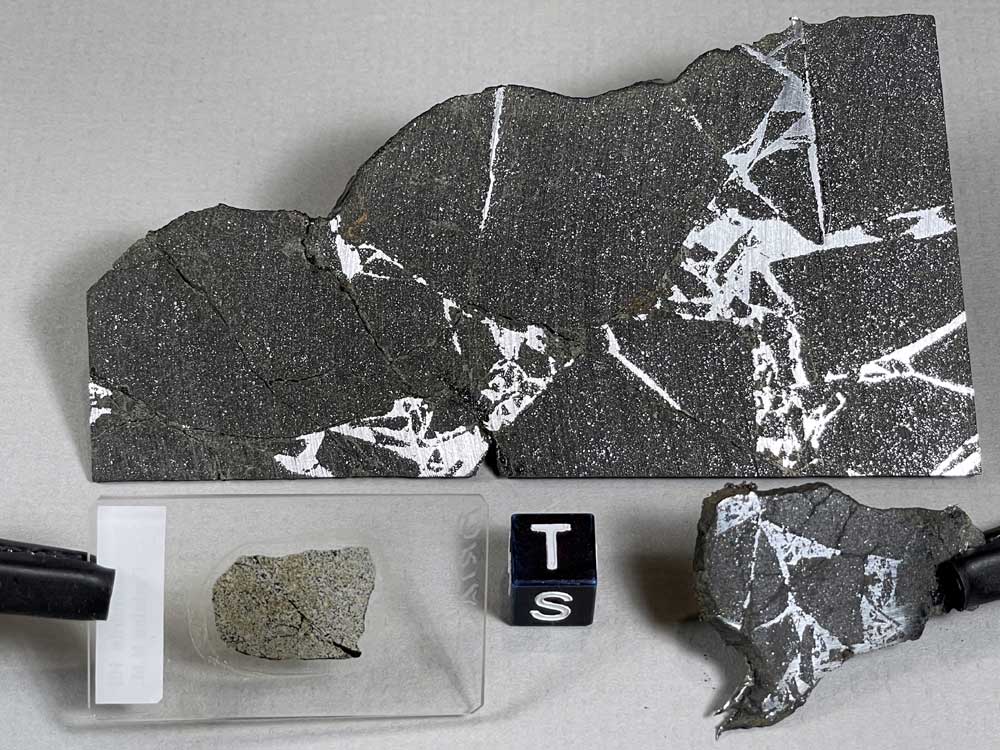
Portales Valley H6 is an odd meteorite. Since it fell in New Mexico in June 1998 researchers have worked to explain how it formed. The metal that conspicuously separates angular silicate clasts might have come from the chondrite mass during a large impact. Another source might have contributed metal in a lesser impact if the parent body was still partially

Portales Valley H6 Read Post »

Gladstone (stone)

The Meteoritical Bulletin Database tells us that Gladstone (stone) is 57.3 kg of H4 found in New Mexico in 1936. A little digging unearthed more information. (There is a Gladstone (iron) found in Australia in 1915). Lang and Keil wrote the guidebook Meteorites of Northeastern New Mexico in 1976 in which they noted: Having had some success in northeastern New

Gladstone (stone) Read Post »

Scroll to Top